Crown thinning
Selectively removing branches to let wind and light through the canopy. This is the single most valuable cut for desert trees that face strong seasonal winds.
Tree trimming and pruning in Enterprise, NV. Thinning, deadwood removal, and shaping that keeps desert trees healthy and safe in heat and wind.
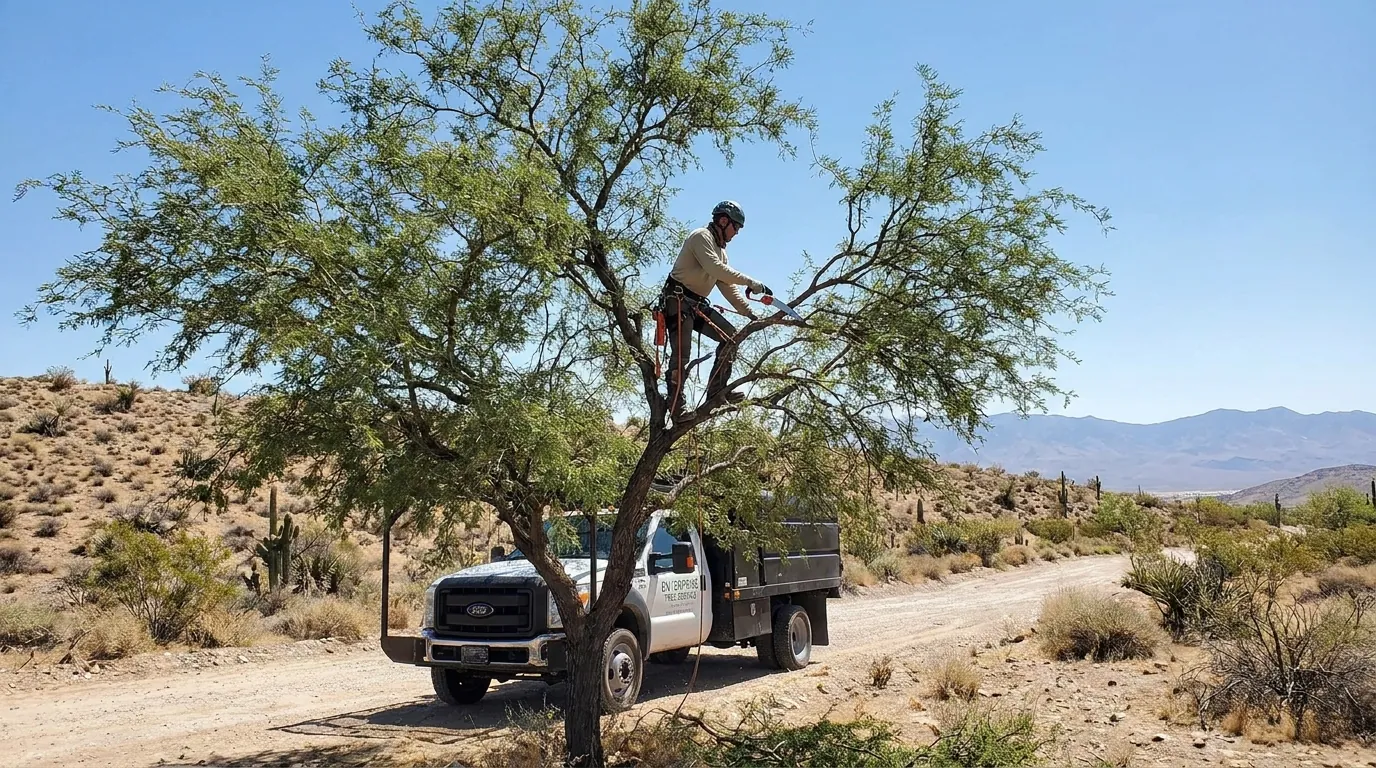
Tree trimming is routine maintenance that pays off in a climate like Enterprise's. Thinning the canopy lets wind pass through instead of pushing against a solid wall of leaves — which is exactly what causes limbs to tear out during our spring and summer gusts. Removing deadwood takes the brittle, heat-dried branches out of the canopy before they drop. And good structural pruning when a tree is young sets it up to grow strong instead of top-heavy.
People searching for tree trimming near me often have a clear trigger: branches scraping the roof, limbs hanging over a patio or driveway, a tree that's grown lopsided, or dead wood they can see from the ground. All of these are good reasons to trim. What we avoid is over-cutting — topping a tree or stripping it bare stresses it badly in desert heat and often leads to weak regrowth that needs removing later.
If a tree is already past the point where trimming helps — dead, hollow, or structurally failed — that's a tree removal conversation instead. When you're not sure which you're dealing with, a tree health assessment gives you a clear answer.
Different trees and different problems call for different cuts. These are the main kinds of work.
Selectively removing branches to let wind and light through the canopy. This is the single most valuable cut for desert trees that face strong seasonal winds.
Taking out dead, dried, and broken limbs before they fall. Heat dries dead wood fast here, so this is worth staying ahead of.
Raising or cutting back branches that overhang roofs, block driveways, scrape walls, or crowd walkways and power service.
Shaping younger trees so weight is distributed well and the tree grows with a strong central structure instead of competing weak leaders.
Correcting lopsided growth so a tree isn't carrying all its weight on one side — a common cause of leaning and failure.
Timing matters in the desert. Heavy cutting in the peak of summer heat stresses a tree when it's already working hard to survive, so most structural and thinning work is better done in the cooler months. Light deadwood and clearance work can be done any time it's needed for safety. We'll tell you if a job is better scheduled for a different season rather than pushing it when the tree would suffer for it.
Technique matters just as much. Every cut is made at the right point so the wound seals cleanly — bad cuts invite decay, and in our dry, alkaline conditions a stressed tree has little margin to recover. We never top trees, because topping removes the canopy a tree needs for shade and food and triggers a flush of weak, poorly attached regrowth that becomes a hazard down the road.
Well-timed, well-made trimming keeps a tree in good shape for years and reduces how often you need bigger interventions. If trimming reveals rot, hollowing, or structural damage we can't correct, we'll let you know so you can plan next steps.
Call to schedule trimming or get a look at an overgrown or storm-stressed tree. We'll recommend the right cuts and the right timing.
Serving Enterprise and surrounding southern-valley communities.
Most structural and thinning work is best done in the cooler months, when heavy cutting won't stress a tree already fighting summer heat. Deadwood and clearance work can be done any time there's a safety reason to do it.
No. Topping removes too much canopy at once and triggers weak, crowded regrowth that becomes hazardous. If a tree needs to be smaller, we reduce it properly with selective cuts, or discuss removal if it's truly too large for the spot.
It depends on the species and how fast it grows, but many landscape trees here benefit from attention every one to three years. Thinning before windy seasons and clearing deadwood are the two jobs worth staying ahead of.
Sometimes. Balancing the canopy so weight isn't concentrated on one side can help a tree that's leaning from uneven growth. A lean caused by root failure or soil movement is a different problem and may call for removal.