Stump Grinding & Stump Removal in Enterprise, NV
Stump grinding in Enterprise, NV. Remove tripping hazards, pest magnets, and regrowth so you can replant, pave, or reclaim your yard space.
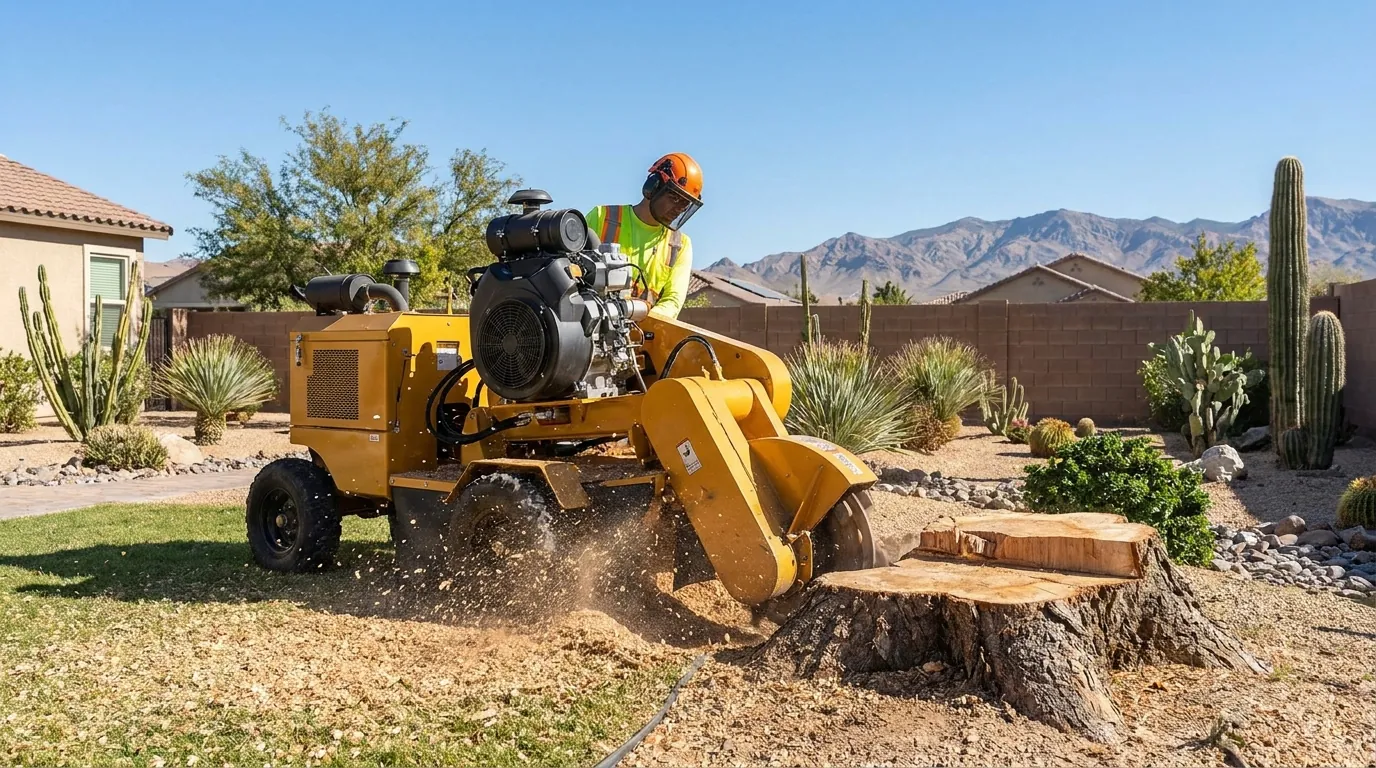
Why that leftover stump is worth dealing with
When a tree comes down, the stump stays behind — and in a desert yard it rarely just fades away. A stump is a tripping hazard in gravel and rock landscaping where it's easy to lose track of, it gets in the way of replanting or paving, and depending on the species it can send up suckers that keep trying to regrow long after the tree is gone. Grinding solves all of it by turning the stump into chips below grade.
Stump grinding often follows a tree removal, but it's just as common as a standalone job — plenty of Enterprise homeowners inherit old stumps left behind by a previous owner or a tree that came down years ago. Either way, the goal is the same: get the wood out of the ground so the space is usable again.
Some stumps are worth grinding simply because they attract pests. Dead wood in warm, dry ground can draw termites and other insects that you'd rather not have established near a structure. Taking the stump out removes the food source.
How stump grinding works
Grinding is more straightforward than a removal, but the setup still matters — especially in desert yards with buried drip lines and rock.
-
Locating what's underground
Before grinding, we check for irrigation lines, buried utilities, and rock near the stump. Drip systems in particular run shallow and are easy to clip if you don't look first.
-
Clearing the area
We pull back rock or mulch around the stump and set up guarding so chips and debris don't scatter across the yard or into pool areas.
-
Grinding below grade
The grinder reduces the stump and major surface roots to chips, typically several inches below the surface so you can plant grass, set a new tree, or finish the area.
-
Backfill and cleanup
The resulting grindings can be used to backfill the hole or hauled off if you're putting in something new. We rake the area clean before leaving.
What affects the job in Enterprise yards
A few local factors shape how a stump grinds here. Alkaline desert soil is often packed hard and laced with caliche — a dense, concrete-like layer — which can slow grinding and affect how deep it's practical to go. Species matters too: a dense mesquite stump is tougher to grind than softer wood, and wide-spreading surface roots common on drip-watered trees add to the work.
Access is the other big factor. Grinding equipment needs a path to the stump, and in tightly built Enterprise neighborhoods with block walls and narrow side yards, getting the machine in place is sometimes the hardest part. We look at access before quoting so there are no surprises.
If you're clearing several stumps at once, or taking out stumps as part of reclaiming an overgrown lot, it may tie in with lot and brush clearing. We can scope the whole job together so it's handled in one pass.
Want a stump gone for good?
Call with the location and rough size of the stump and we'll talk through access and what grinding it out involves.
Serving Enterprise and nearby southern-valley communities.
Frequently asked questions
How deep do you grind a stump?
Typically several inches below grade — enough to plant grass or a new tree, or to finish the surface. Dense caliche soil or buried rock can limit depth in places, and we'll tell you if that's a factor on your property.
Does grinding remove the whole root system?
Grinding takes out the stump and the major surface roots, not every fine root underground. For most purposes that's enough, because the remaining roots are no longer attached to a living tree and will break down over time.
Can you grind a stump in a tight side yard?
Usually, but access is the deciding factor. The grinder needs a path wide enough to reach the stump past block walls and gates. We check access before the job so there are no surprises on the day.
What should I do about the hole left behind?
The grindings can be used to backfill the spot, or we can haul them off if you're planting or paving. Keep in mind grindings are wood, so for a new planting you may want to top with soil.