Brush and scrub removal
Cutting and hauling the low, dense growth — creosote, scrub, invasive grasses, and volunteer seedlings — that builds up on undeveloped desert ground and carries fire.
Lot and brush clearing in Enterprise, NV — removing overgrowth, dead wood, and fire fuel from desert lots. What's involved and how to plan the work.
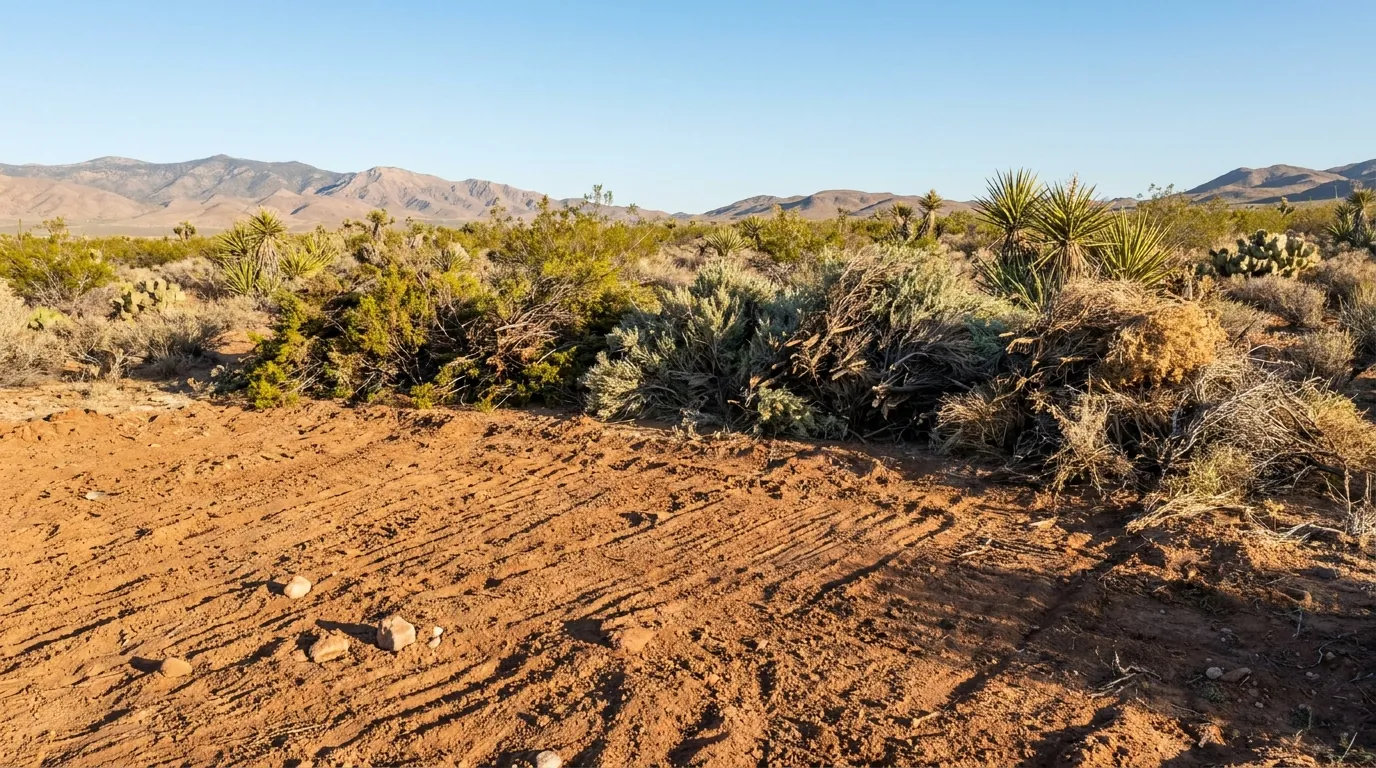
Enterprise sits on the growing southwest edge of the Las Vegas Valley, where developed yards back up against open desert and plenty of parcels still carry years of accumulated scrub, volunteer trees, and dead wood. Lot and brush clearing is the work of taking a piece of ground that's overgrown, hazardous, or simply unusable and turning it into something you can build on, landscape, or safely leave alone. It's a different job than removing a single shade tree — it's about the whole surface of a parcel.
Homeowners and property owners call for clearing for a handful of reasons: a new build or addition, a defensible space buffer to pull flammable fuel away from a structure, access for a driveway or utility run, or just reclaiming a back lot that's become a tangle of mesquite, scrub, and wind-blown trash trees. Where a lot has mature trees worth keeping or worth removing individually, clearing often pairs with tree removal and follow-up stump grinding so the ground is left clean rather than studded with cut stumps.
Every lot is different, but most clearing jobs in this area involve some mix of the following.
Cutting and hauling the low, dense growth — creosote, scrub, invasive grasses, and volunteer seedlings — that builds up on undeveloped desert ground and carries fire.
Drought-killed trees and fallen limbs are both a fuel load and a nuisance. Removing them is one of the highest-value parts of clearing a neglected lot.
Trees that seeded themselves along fence lines and washes are usually poorly placed and poorly structured. We take them out at the base and grind or pull stumps as needed.
Pulling flammable vegetation back from structures and thinning what remains so a fire has less to carry. This matters most where homes meet open desert at the valley's edge.
Clearing goes faster and cleaner when it's planned before the first cut.
We walk the parcel with you to agree on what stays and what goes — specimen trees worth keeping, property lines, buried utility corridors, and access points for equipment and hauling.
Brush and small trees come down first and get staged in piles. Larger trees are felled or sectioned down in controlled drops, keeping clear of fences, structures, and neighboring lots.
Once the wood is down, stumps are ground below grade so the lot sits level and doesn't resprout. This is where clearing and [stump grinding](/services/stump-grinding/) overlap closely.
Debris is hauled off and the surface is left in a usable state. We can leave the ground bare for building or thinned for defensible space, depending on what the lot is for.
Clearing in Enterprise is shaped by the same conditions that make tree care here distinct: arid heat, alkaline desert soils, and scarce rainfall. That cuts both ways. Dry, drought-stressed brush is lighter and easier to cut than lush growth, but it's also far more flammable, which is exactly why reducing it near structures is worth doing before fire season rather than after. The soil itself — loose, mineral, and quick to shift when it does get wet — means stumps and root plates often come out more easily than they would in heavy clay, but it also means a cleared slope can erode if it's stripped bare and then hit by a monsoon downburst.
Species makes a difference to the plan, too. Deep-rooted desert natives like mesquite can have taproots that resist a shallow grind, while shallow-rooted volunteers pull readily. Knowing what's growing on a lot before the work starts keeps the quote honest and the schedule realistic. If a parcel has a few trees you'd rather keep healthy than clear out, a quick tree health assessment can tell you which ones are worth saving and which are already too far gone to protect.
Call to describe the parcel — rough size, what's growing on it, and what you want it ready for. We'll help you scope the work.
Clearing near structures is best done ahead of fire season, not during it.
Both. We handle full-parcel clearing for builds and large cleanups, and partial work like a defensible-space buffer around a home or a cleared corridor for a driveway or utility run.
It's cut, staged, and hauled off the site. We leave the ground in a usable state rather than piled with debris, and we can grind stumps below grade so the lot sits level.
Yes. We walk the lot with you first and mark specimen trees to protect, then clear around them without damaging the trunk or root zone. Trees you're unsure about can be assessed before you decide.
Stripped soil on a slope can wash during a monsoon downburst. For sloped lots we can thin rather than bare the surface, or stage the work so you're not leaving loose ground fully exposed before the rains.